
Last updated November 24, 2026
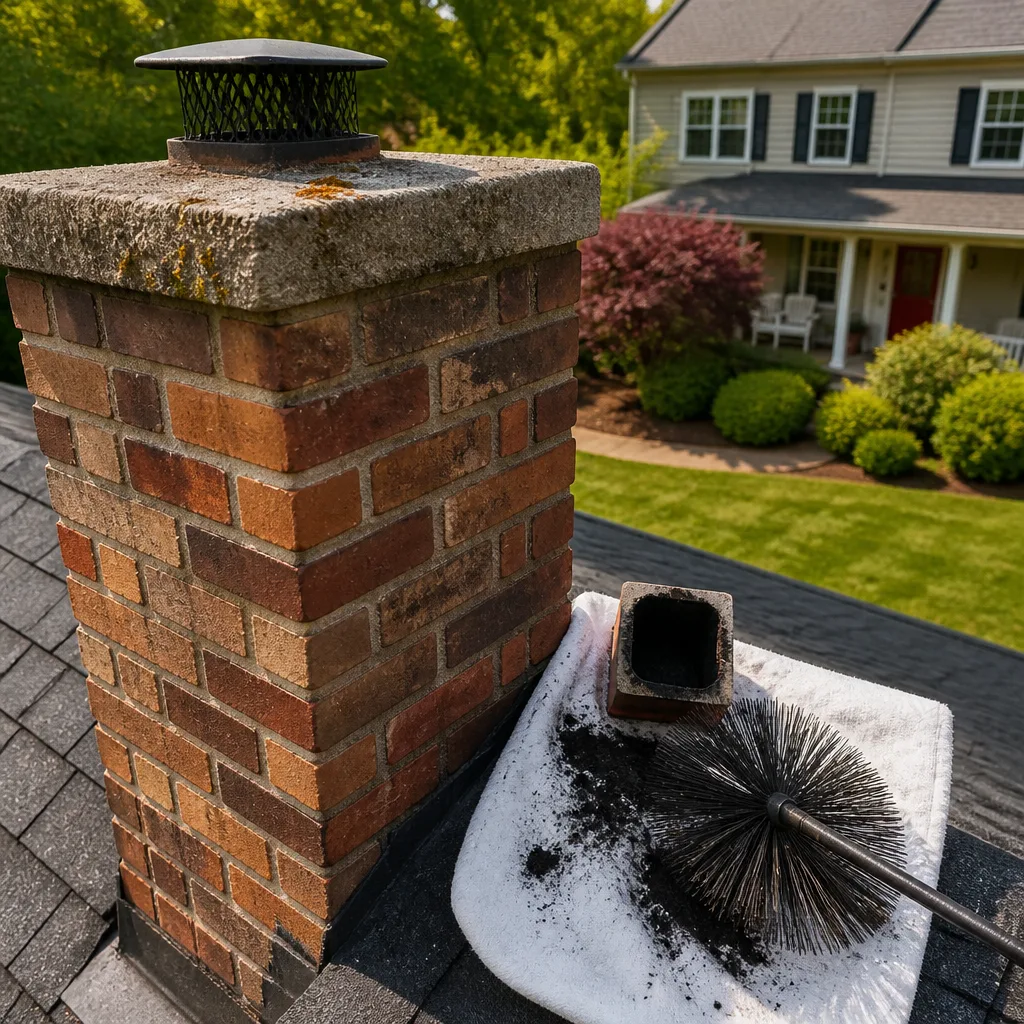 Sweep & inspection
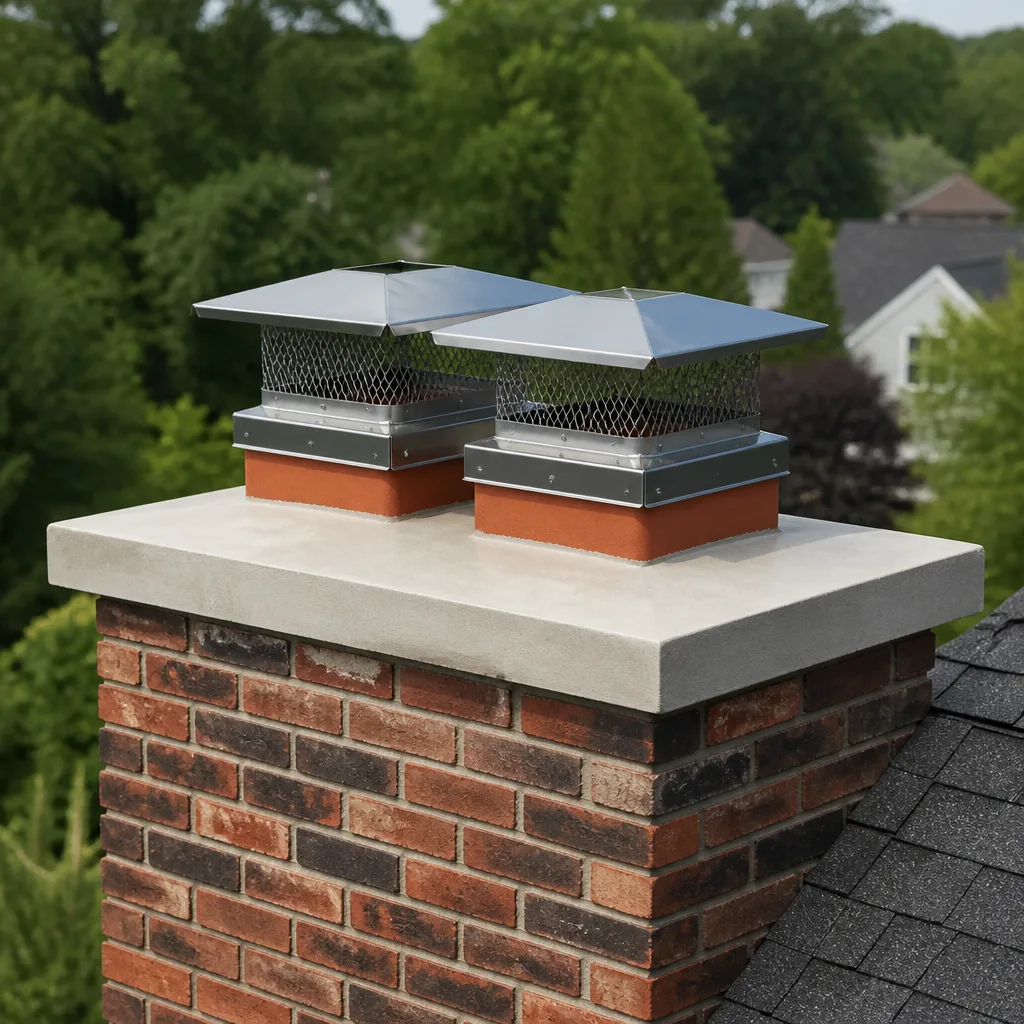 Caps & crowns
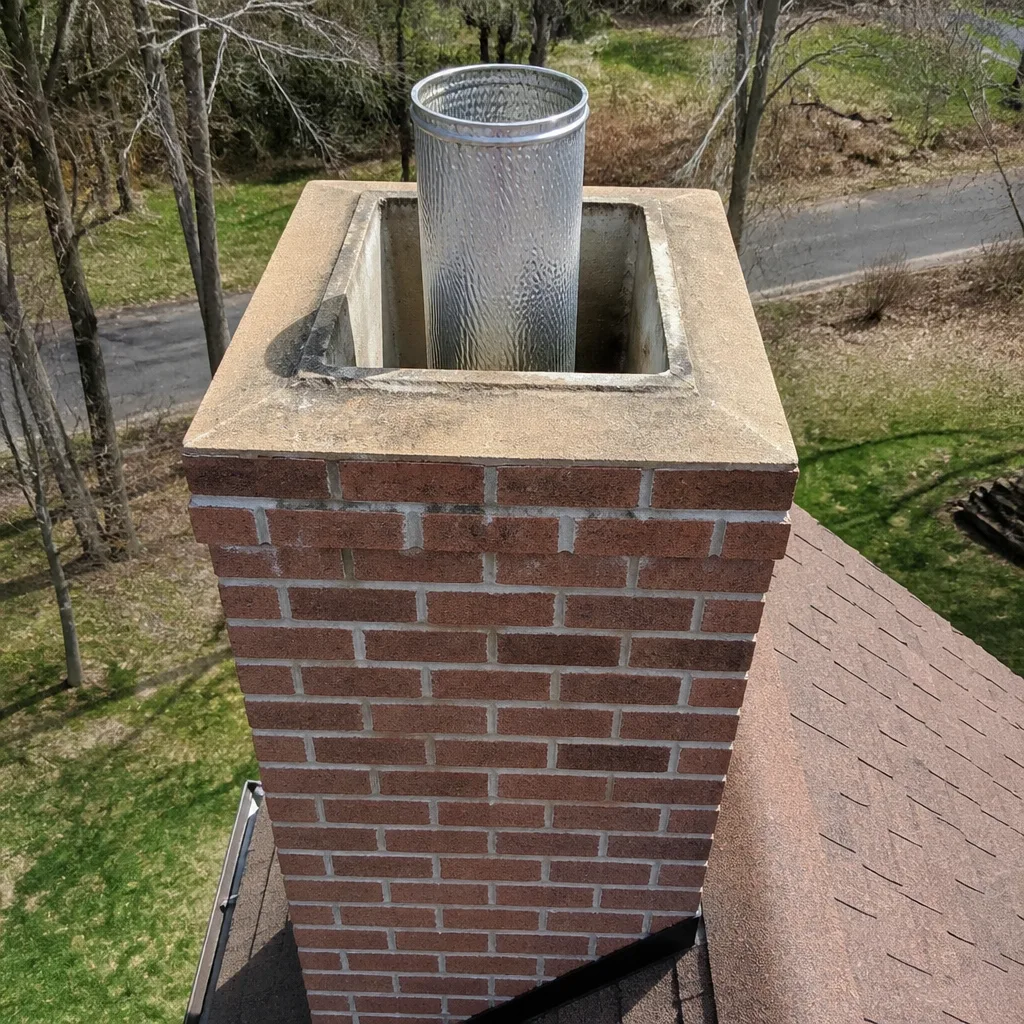 Flue relining
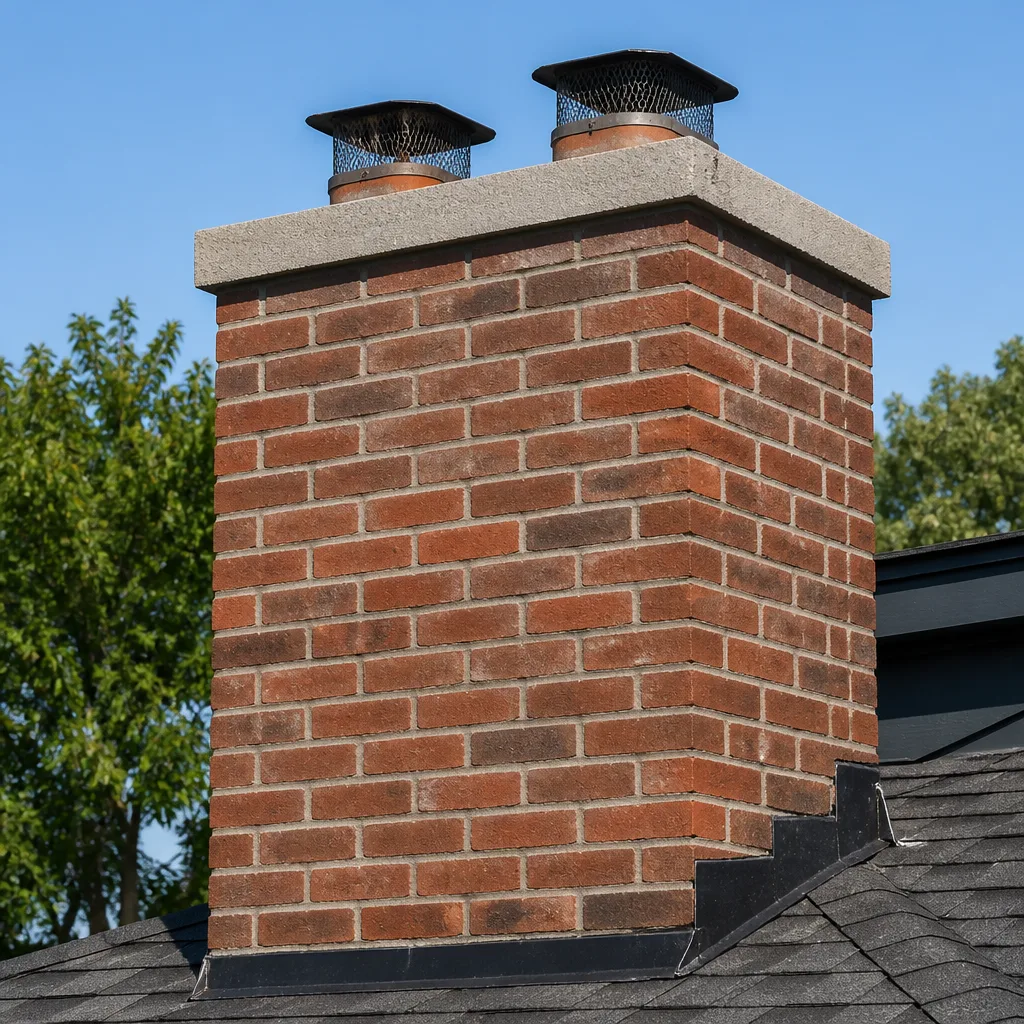 Masonry repair
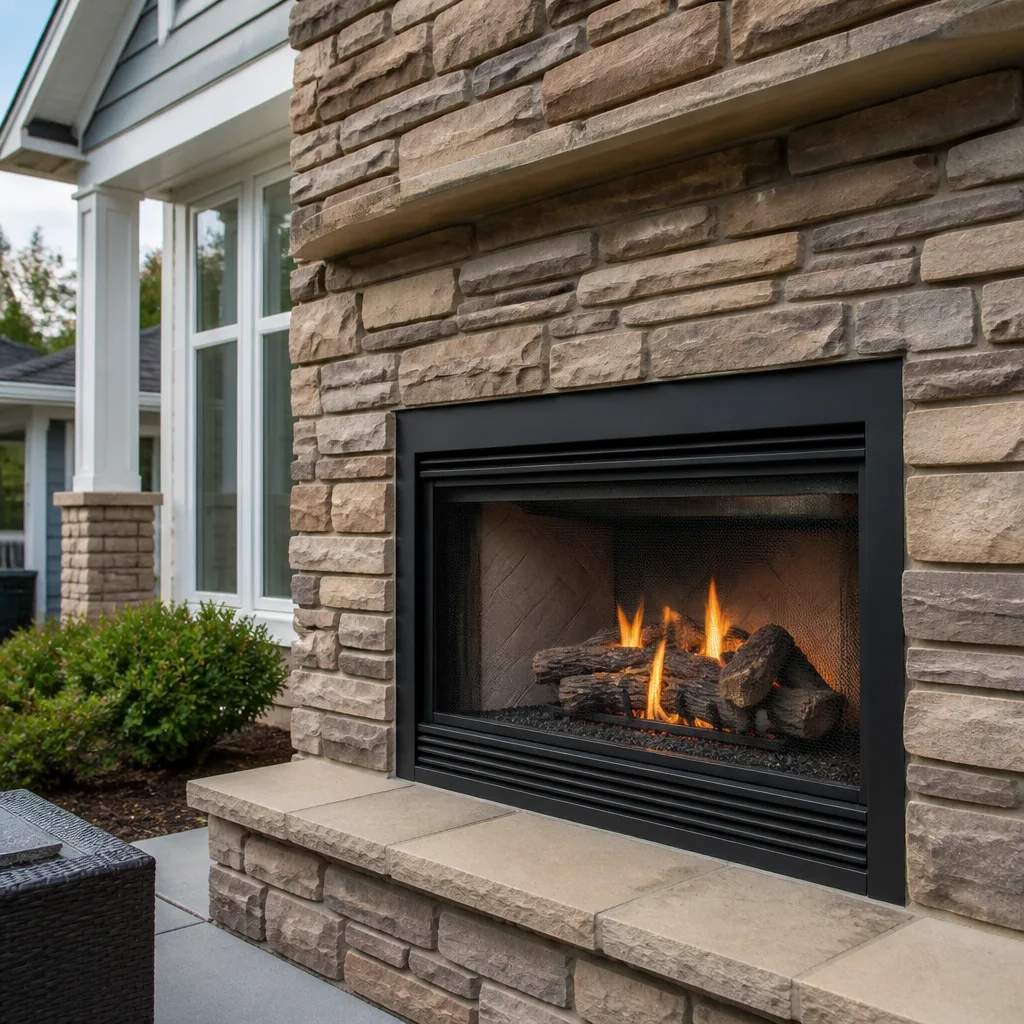 Gas fireplace service
Level 1 sweep and inspection to the NFPA 211 annual standard - flue, crown, cap, and flashing checked and photographed
Chimney sweep logs do not sweep chimneys. They loosen some creosote - which then falls where a brush and vacuum still have to collect it.
Chimney Cleaning Emergency Preparedness Guide for Cherry Creek Homes
Most Cherry Creek homeowners already have a fire extinguisher under the sink and a smoke detector in the hallway, and both are worth having. Neither one tells you what to do when the emergency starts inside the chimney. A creosote fire, a carbon monoxide event, and a blocked flue look nothing alike from the living room, and each one calls for a different first move. Getting the moves right is a skill, and the only calm moment you’ll ever have to learn it is before anything happens. This guide is a pre-incident briefing: what to recognize, what to do in order, and what has to happen before you light another fire.
Quick Answer
If you think your chimney is on fire, close the damper and any air inlets, call 911, and get everyone out of the house. If a carbon monoxide alarm sounds with no fire, get out and call 911 without stopping to investigate. If you smell smoke or the fire won’t draw, stop using the fireplace and book an inspection before you light another fire. A chimney sweep and Level 2 inspection in Cherry Creek after any of these events is the step that tells you, in writing, whether the flue is safe to use again.
Styles & brands we work with
- Sweep & inspection
- Caps & crowns
- Flue relining
- Masonry repair
- Gas fireplace service
Table of Contents
- The Three Chimney Emergencies (and Why They’re Not the Same)
- How to Recognize a Chimney Fire vs. Normal Combustion Noise
- Step-by-Step: The First 90 Seconds of a Chimney Fire
- Carbon Monoxide Risk in Cherry Creek’s Tight, Well-Insulated Homes
- Flue Blockages: Starlings, Ice Damming, and Windstorm Debris
- After a Chimney Fire: Inspections, Insurance, and “Cleared for Use”
- Prevention Calendar: What to Check Before the First Fire
The Three Chimney Emergencies (and Why They’re Not the Same)
A chimney system produces three distinct kinds of emergencies, and they don’t share a response. A chimney fire is a combustion event inside the flue or the firebox. A carbon monoxide event is a venting failure – combustion gases ending up inside the house instead of outside it. A flue blockage is a physical obstruction that stops the system from drafting at all, and it can produce either of the other two. In Cherry Creek, where many homes sit on older brick chimneys updated with newer appliances, all three are realistic possibilities rather than rare ones.
The reason they get blurred together is that the visible symptoms overlap. Smoke backing into a room could mean a blocked flue, a cold-flue backdraft on a mild evening, or incomplete combustion from a fire that’s starving for air. Heat at the firebox face could mean a roaring fire, or a fire climbing into the flue. Chills and a headache in a closed room could mean you need to open a window, or they could be an early carbon monoxide symptom. A homeowner can’t always tell the difference in the moment, and no guide should ask them to. What a homeowner can do is learn the responses for all three and then act.
- Chimney fire: Close the damper and air inlets, call 911, evacuate. Do not throw water into the firebox.
- Carbon monoxide event: Get out of the house immediately and call 911. Do not ventilate the home first or wait to see if the alarm stops.
- Blockage with no fire: Extinguish the fire if there is one, stop using the fireplace, and book an inspection. A blocked flue doesn’t become safe by burning hotter.
If you’ve never had your chimney inspected, or your home is new to you, the first useful step is a proper chimney sweep and inspection that establishes a baseline. Everything else in this guide assumes you already know what your flue looks like inside – because that’s what makes a plan more than a guess.
How to Recognize a Chimney Fire vs. Normal Combustion Noise
A chimney fire can push flue temperatures well past 2,000°F, and the living-room thermometer next to your fire will never register it. The fire is happening inside a masonry or metal column above your head, and the signals reach you through sound, spark, and heat rather than through the fireplace opening. In our experience, homeowners often find out after the fact – a neighbor sees sparks on the roof, or a later inspection finds a cracked flue tile that wasn’t there last year.
Normal wood-fire noise is not silent. Wood pops, the flue hisses, and you’ll hear a soft draft like a low wind. Those are the baseline sounds, and the point of listening tonight is to know them so tomorrow’s roar sounds different.
Signs of a chimney fire:
- A low, rumbling roar or a sound like a freight train or a distant jet – audible from inside the living room and louder near the fireplace.
- Sparks or thick smoke visible from the top of the chimney or the roof.
- Intense heat at the firebox face or the wall behind the fireplace, hotter than the fire itself would justify.
- A smell of hot creosote, sharper and less pleasant than woodsmoke.
- Smoke puffing back into the room through the damper or the seams of the firebox.
Signs that are more likely normal:
- A steady whoosh when you first light a fire on a very cold day – a cold flue warming up and establishing draft.
- Wood crackles and occasional small pops from sap pockets in softwoods.
- A low whistling on a windy Front Range evening when the fire is burning normally – wind interaction with the cap, not the flue.
The key distinction is temperature, escalation, and sound shape. Normal combustion noise is steady and finishes when the fire is out. A chimney fire sounds like it’s growing. When the sound changes and you’re unsure, treat it as a chimney fire and act. Getting up on the roof to look is not part of the plan – falls are the most common reason a chimney problem turns into a hospital visit, and no homeowner should be up there in the dark or in a snowstorm.
Step-by-Step: The First 90 Seconds of a Chimney Fire
Acting on instinct under stress almost never works at your best. What works is a physical sequence you’ve rehearsed so the moves come without a decision in the moment. This is the exact order of steps a trained chimney professional would give a homeowner – close the air, call, get out. It takes less than two minutes.
- Close the damper. If the flue fire is drawing, the damper is feeding it air. Close it completely. If it’s already closed, leave it.
- Close every air inlet into the firebox. Glass doors, ash door, combustion air damper, and any outside air vent to the fireplace. Starving the fire of oxygen is the single most effective intervention a homeowner can perform.
- Call 911. Not the chimney sweep first. A chimney fire can spread into the roof structure through the crown and flashing without visible flame from the front of the house. Firefighters decide whether the roof needs work.
- Evacuate everyone. Every person, every pet, out the nearest door, then move away from the chimney side of the house. Do not go back inside for possessions.
- Stay out until the fire department releases the scene. Even if the fire appears to have gone out on its own, structural damage inside the flue can’t be assessed from the yard.
Do not throw water into the firebox. A flue that’s several hundred degrees hotter than the surrounding masonry can crack violently from a bucket of water, and the sudden steam and pressure can push flames, creosote, and smoke back into the room. Water is a tool for the fire department because they can apply it deliberately through the top of the chimney with equipment built for it – it’s not a homeowner move. The same rule covers throwing salt on the fire or using a garden hose through the damper.
After the fire department has cleared the scene, do not relight the fireplace. The next step is a Level 2 inspection, which we cover below, and after that the specific repair or relining work – the kind of chimney cap & crown or flue work that keeps a fire from repeating.
Carbon Monoxide Risk in Cherry Creek’s Tight, Well-Insulated Homes
Carbon monoxide is the emergency with no sound, no smell, and no visible sign. It’s produced by any incomplete combustion – a smoldering fire, a gas log set that isn’t sending products of combustion up the flue, a gas furnace or water heater whose flue is blocked or cracked. The reason Cherry Creek homes need their own note on this is that the housing stock is unusually tight. Newer and updated homes are built to keep conditioned air inside, and a pressure envelope that tight also stops the natural leakage that used to let a small venting failure escape outdoors.
Where a firebox draws air from the room, and the room is well sealed, the fireplace competes with the furnace flue and the bathroom exhaust fan for the same air. Whichever appliance pulls hardest wins, and sometimes the winner pushes combustion products down a flue instead of up it. That’s why a CO event can happen in a house with no visible chimney problem.
Where CO detectors should go, relative to the chimney system:
- One on every level where people sleep, including the basement, if you have one.
- One in the same room as the fireplace, ideally on a wall roughly at breathing height (chest or head level), not directly above the firebox.
- One near the furnace flue and water heater flue, usually in the mechanical room or utility closet – and never inside the closet itself.
- One outside each bedroom door rather than inside the bedroom, so the alarm is heard if the door is shut.
If any CO detector sounds and there is no fire, get out and call 911 from outside, before you open windows or investigate. Once the house is safe, the question of why the alarm sounded is an inspection question. A cracked or partially disconnected flue, a corroded metal liner, or a flue that shares a chase with a second appliance are all things we can find on a Level 2 inspection. If the flue needs relining, the solution might be a professional-grade flexible liner like DuraFlex, or HeatShield resurfacing if the liners are still structurally sound but have gaps.
Flue Blockages: Starlings, Ice Damming, and Windstorm Debris
A blocked flue is the slow emergency. Nothing dramatic happens, but the fire doesn’t draw, smoke comes back into the room, and combustion products find another way inside. Cherry Creek’s Front Range setting makes three blockage scenarios especially common, and each one is recognizable once you know what to look for.
Bird nesting in the cap
European starlings are the most common culprit on Cherry Creek and Front Range rooflines. They look for chimney openings in early spring and can build a nest inside a flue or on a cap screen in a matter of days. The signs: scratching or fluttering sounds from the flue when there’s no fire, a fire that smokes back consistently, and in some cases feathers or twigs at the top of the firebox. If the cap has no screen at all, or the screen is damaged, that’s an open door. A professional cap with a proper mesh screen is the reason to consider dedicated chimney cap & crown work – the cap exists to keep animals and water out, and a missing or broken one is doing neither. Never try to clear a bird nest by relighting a fire to “burn it out.” Bird nests, twigs, and feathers burn hot and uncontrolled, and a blocked flue won’t draw the fire up anyway.
Ice damming at the crown
A January or February thaw on a Cherry Creek roof can refreeze overnight, and the crown – the mortar cap at the top of the chimney – is where the ice most often forms. Meltwater runs down the flue tile and refreezes at the top, then expands. When it thaws, the ice can drop in sheets onto the smoke shelf, and the crown itself can crack. The signs: a crack visible at the top of the chimney from the ground, water stains inside the firebox or on the damper, or a sudden draft problem after a warm snap in winter. A cracked crown isn’t something a homeowner can repair, but it is something to catch early.
Debris after Front Range windstorms
A strong windstorm – not rare on the Front Range in spring and early summer – can drop full branches onto roofs and chimneys or pull the cap loose. If a fire that drew well last week suddenly smokes, and there’s been a wind event between, suspect debris. Signs include a fire that blows smoke into the room from the top of the firebox, a cap askew on the roof, or leaf litter visible inside the flue from the top. Never climb the roof to clear it. Even an overhanging branch you can see is at the wrong end of a fall.
After a Chimney Fire: Inspections, Insurance, and “Cleared for Use”
After any chimney fire – even one that sounded minor – the flue needs a Level 2 inspection before the fireplace is lit again. A Level 2 inspection is the industry-standard step that looks at the flue with a camera, checks the liner and the joints between flue tiles, checks the crown and cap, and examines the firebox and damper. A Level 1 inspection, which is what you’d expect on a routine annual sweep, looks at what’s visible from the ground and the firebox. It’s not enough after a fire. The camera isn’t optional.
We can’t speak for your insurer, but in our experience a claim that follows a chimney fire tends to move faster when the inspection documentation is in hand. That means:
- A written inspection report identifying what was damaged (liner, flue tile, crown, damper, firebox).
- Photographs and camera footage of the flue interior, both the damaged section and the transition to a sound section.
- A written description of what repairs are specifically required and what “cleared for use” means for your system – not just “safe” but which components in which condition.
“Cleared for use” should never be verbal. If a contractor tells you over the phone that your chimney is fine to relight without putting that in writing, get a second inspection. The phrase in your hand should be tied to a specific inspection level, a list of what was inspected, and any conditions (for example, “do not use until the damaged flue tile is relined”). We’ve seen homeowners relight a fireplace after a fire on verbal reassurance alone, and then face a second fire before the first repair was even scoped.
If the flue needs relining, we work with professional trade systems including DuraFlex flexible liners, HeatShield resurfacing, Olympia Chimney and Gelco components, and Cap specifications chosen for the specific chimney. Nothing is a big-box substitute; the parts are purpose-built for the application. If the fire involved structure, the next step may be broader chimney repair that goes beyond the flue alone.
Prevention Calendar: What to Check Before the First Fire
The most useful emergency plan is the one that prevents the emergency. Cherry Creek’s seasons suggest a rhythm; the work is small enough that it fits into a Saturday morning and specific enough that it’s worth writing down.
Before the first fire of the season (September to October)
- Book a sweep and inspection. Creosote builds during the season and a sweep at the start means the fire that goes in this fall is burning in a clean flue. A Level 1 inspection alongside the sweep catches visible problems before winter.
- Test every CO detector and smoke detector. Replace batteries if due. Confirm each detector shows green.
- Look at the cap from the ground. A missing or damaged cap, or a screen that’s been pushed in, is the open door for starlings and water. Note it and have it fixed with cap and crown work rather than a later emergency call.
- Check the firebox and damper. The damper should open and close smoothly. Loose firebrick, a cracked damper plate, or a visible gap at the firebox wall is a “call before you burn” item.
After any storm (year-round)
- Look up at the chimney from the yard after a windstorm. A crooked cap or a missing cap screen counts.
- If you had a fire during or just before the storm, sweep before relighting – loose debris inside the flue won’t clear itself.
Midwinter
- Watch for ice at the crown after a thaw. Water dripping into the firebox in January is worth a call.
- Listen to your fire for the first few minutes after lighting. A fire that normally draws well and suddenly doesn’t is a signal, not an inconvenience.
If any of these items is “we don’t know,” that’s the point of the plan. A first inspection establishes the baseline; from there, each fire season adds to what you know. Chimney Sweep Cherry Creek offers inspections as a standalone service, so you don’t have to commit to repair work before you know what’s actually going on.
Common Mistakes to Avoid
- Calling the sweep before calling 911. A chimney fire is a fire department job first. Chimney professionals assess and repair afterward. Scheduling a sweep and skipping the fire call risks missing structural spread the fire department needs to check.
- Throwing water into the firebox. A hot flue can crack and flash-steam when water hits it, and the sudden pressure sends smoke and flames into the room. Water is a fire department move, applied from the top.
- Relighting after a fire on verbal reassurance. A verbal “it looks fine” isn’t a replacement for a Level 2 inspection and a written report. Insurers and your own family both need more than that.
- Relying on smoke detectors alone. Smoke detectors don’t detect carbon monoxide. In a tight, well-insulated Cherry Creek home, a CO event can develop with no smoke at all.
- Burning green or wet wood to “save money.” Wet wood cools the fire and produces more creosote per hour of burn. That’s the fuel a chimney fire needs. Seasoned wood, split and stacked for a season, burns cleaner and sends less up the flue.
- Climbing the roof to check the cap. The most common serious injury in chimney work is a fall from the roof. A cap problem is a call, not a ladder job.
- Waiting until the flue is blocked to sweep. A flue with a visible creosote glaze on the inside is past due for a sweep. Cherry Creek fireplaces get used hard in a cold winter, and waiting for a blockage means waiting for an emergency.
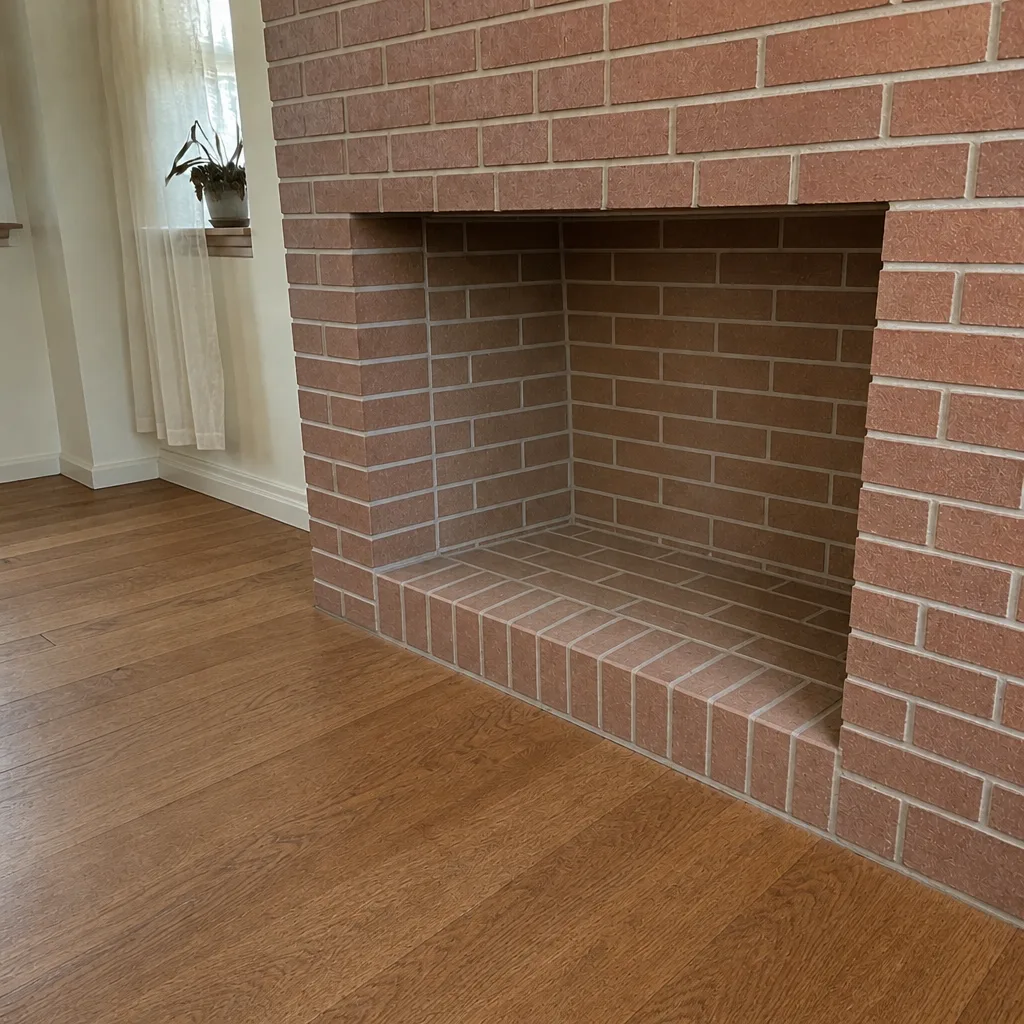
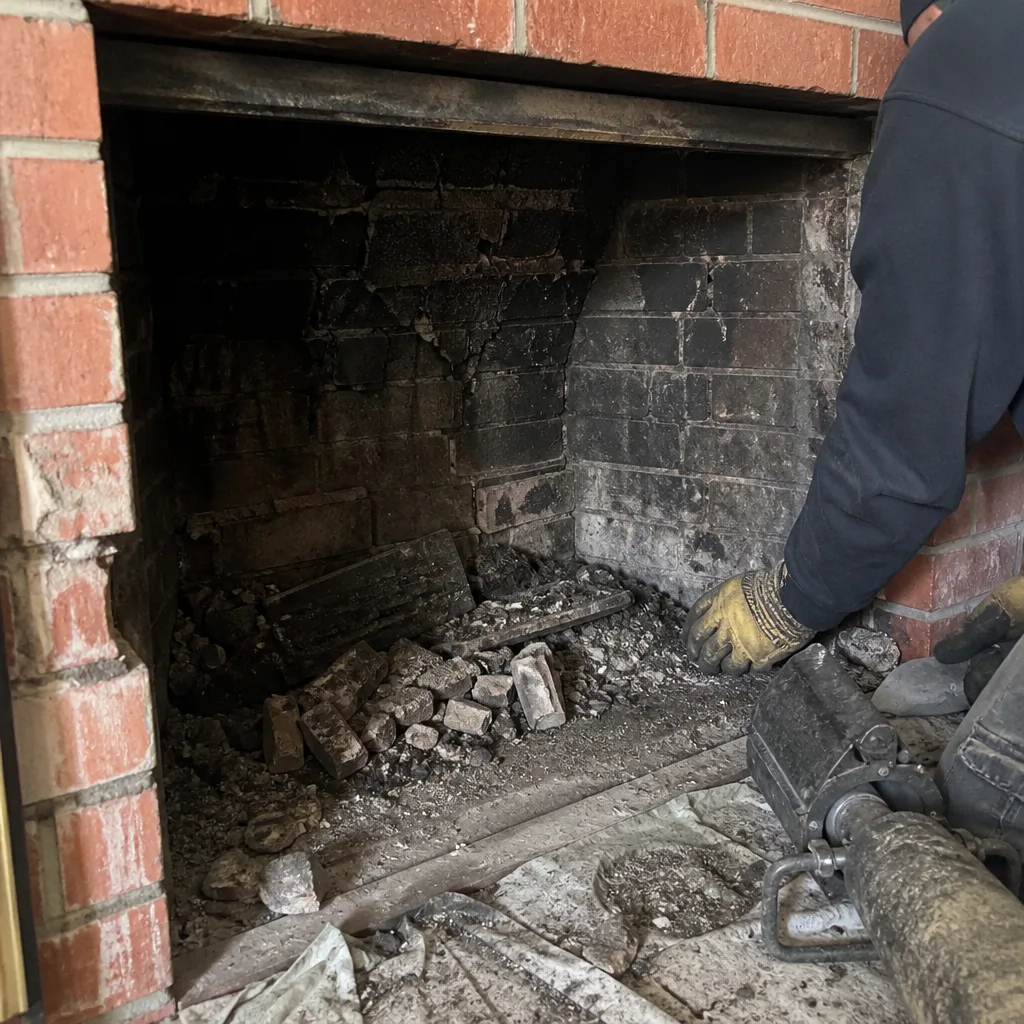
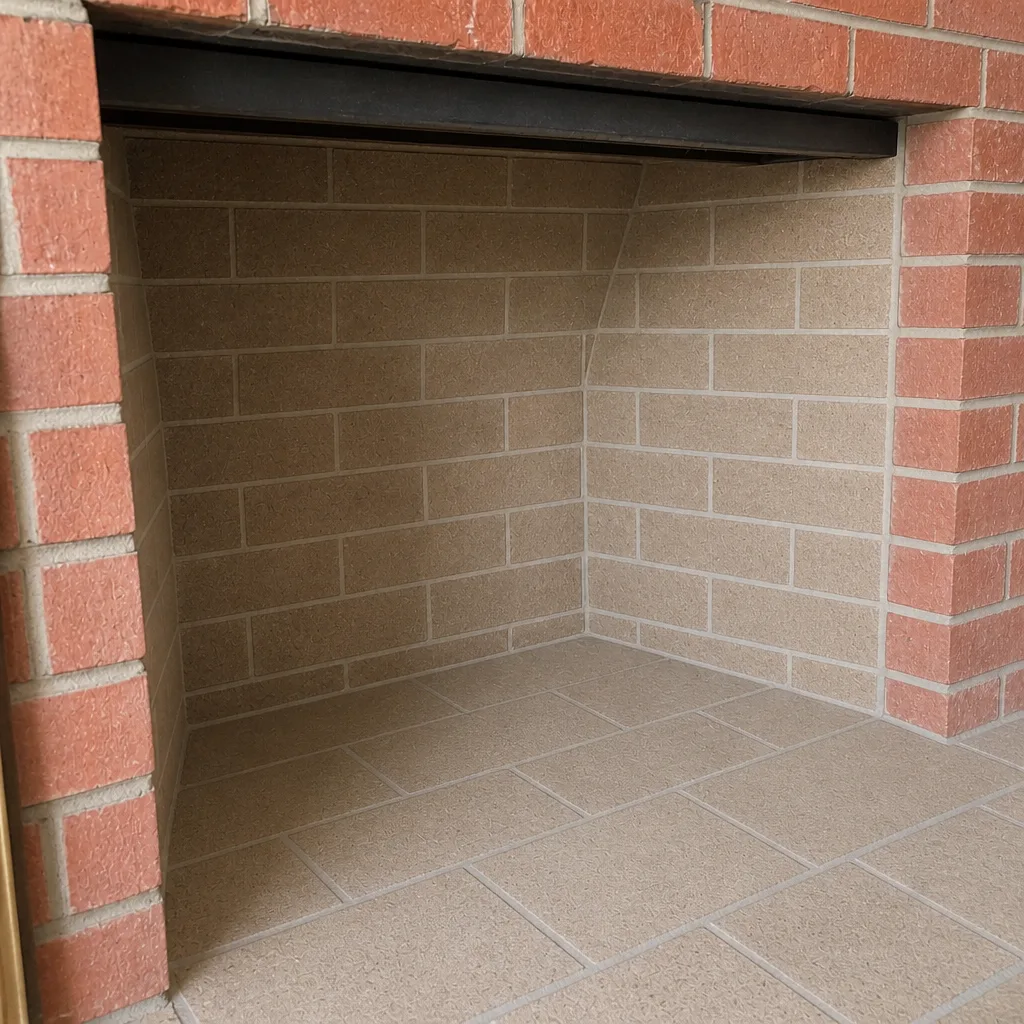
See the difference
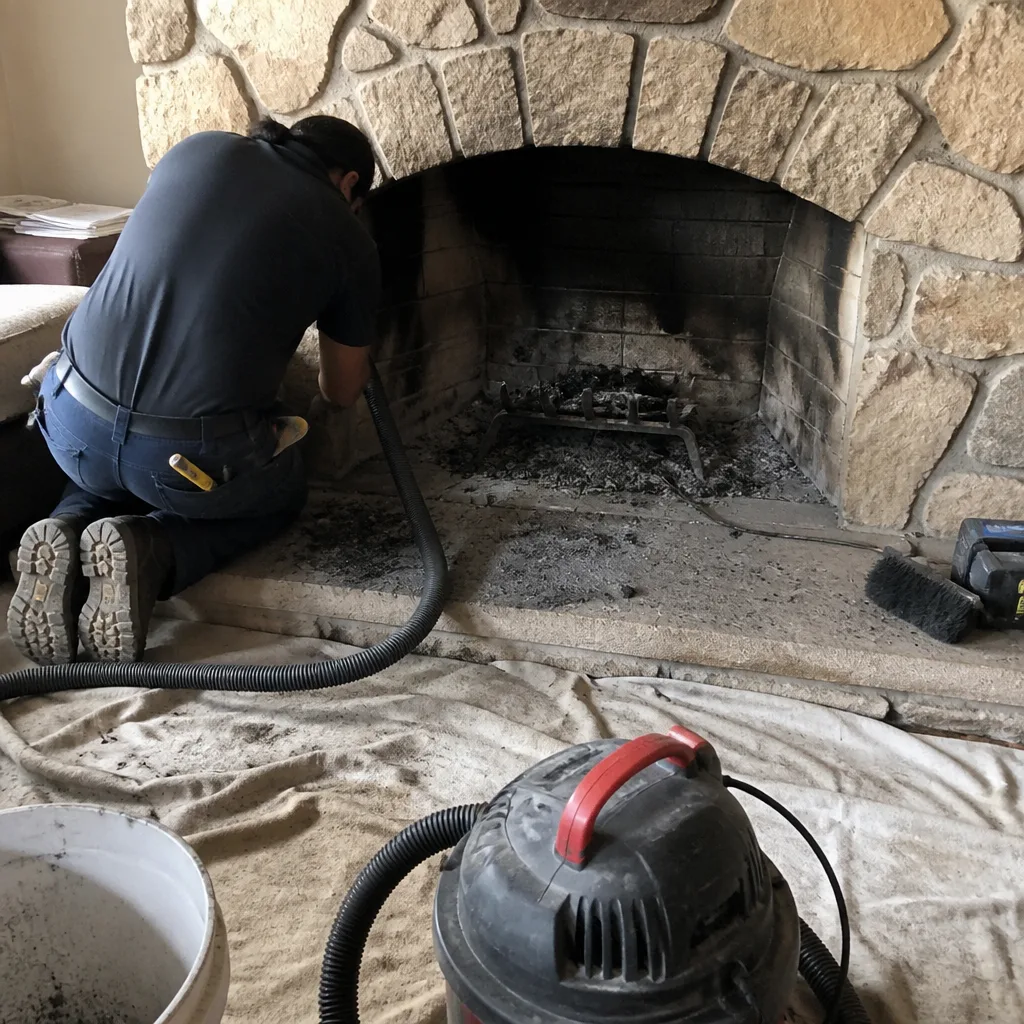 Before
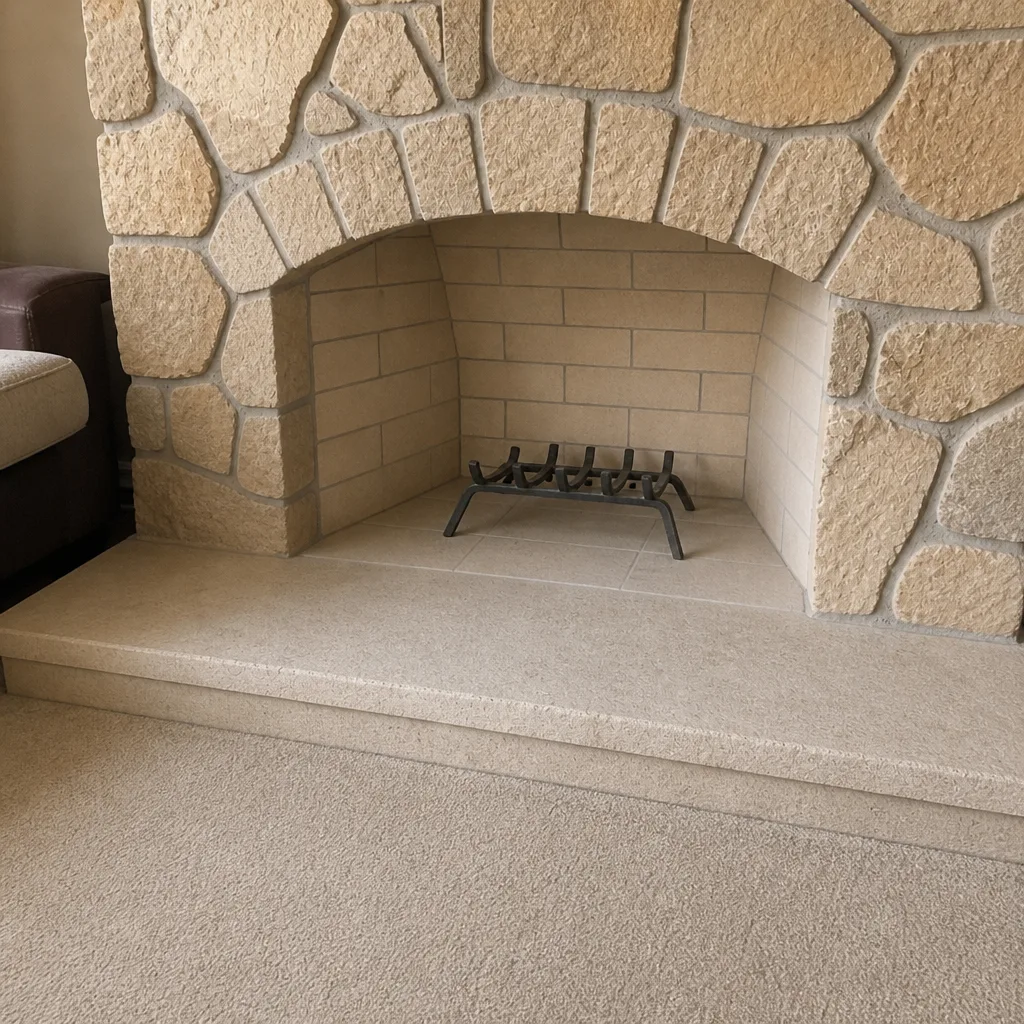 After
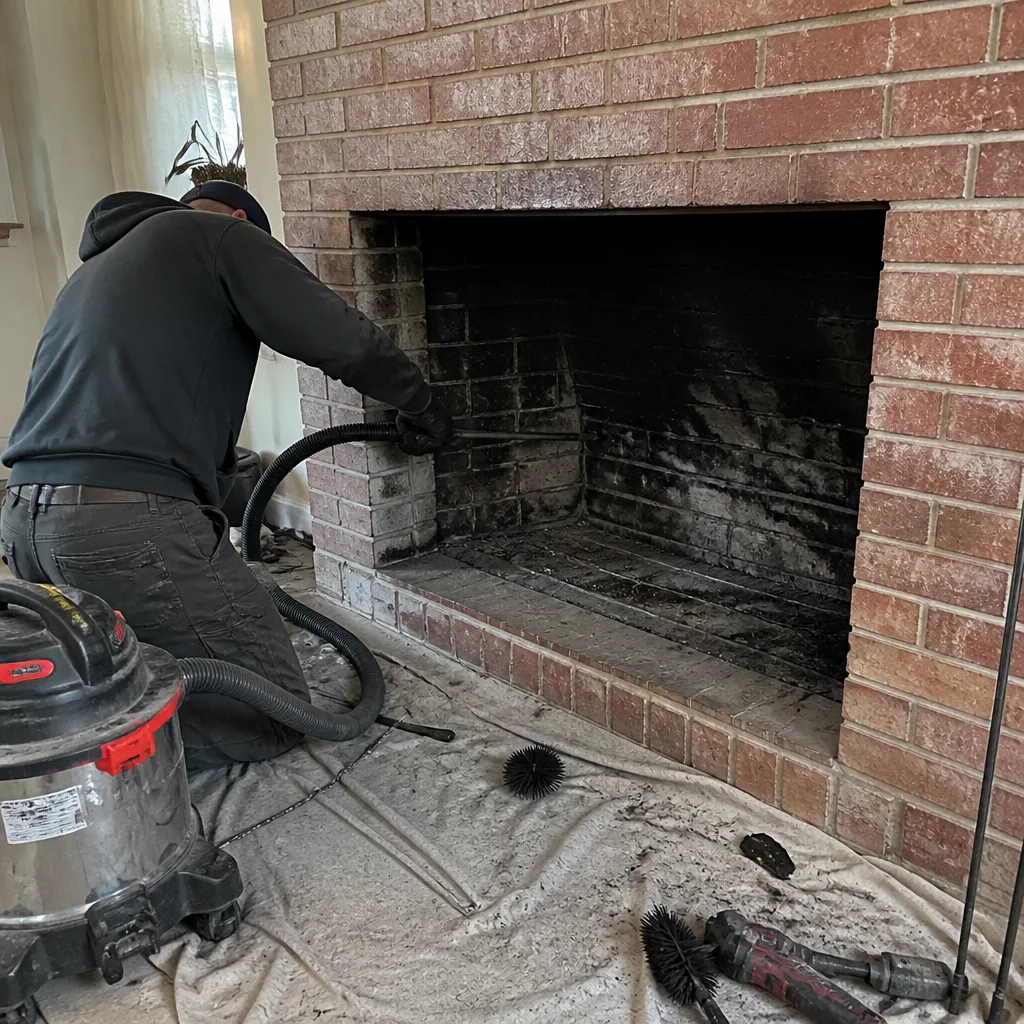 Before
 After
 Before
 After
When to Call a Professional
Some chimney problems are fine to sit on for a few weeks while you get quotes. A few are not, and knowing the difference is most of the work. Call us right away if you’ve had a chimney fire, if a CO detector has sounded, if smoke is backing into the room when there’s an established fire, if the flue smells strongly of creosote after a fire, or if the crown or cap is visibly damaged after a storm. Also call if you can’t remember the last sweep – a first inspection on a home you’ve just moved into is worth doing before the first fire. Chimney Sweep Cherry Creek offers free estimates in Cherry Creek – call (866) 937-8043, and we’ll book an inspection at a time that fits your week. We answer 24/7. Fast dispatch from 7am to 7pm, Sunday through Friday.
Frequently Asked Questions
Close the damper and all air inlets to the firebox, call 911, and evacuate the house. Don’t throw water into the firebox; a hot flue can crack and flash-steam and push smoke and flames back into the room. Call (866) 937-8043 after the fire department has cleared the scene to book the Level 2 inspection you’ll need before relighting.
A chimney fire sounds like a low roar or freight-train rumble that grows over seconds, and it’s often paired with intense heat at the firebox face or sparks visible from the top of the chimney. Normal combustion noise is a steady hiss and crackle that peaks when you first light the fire and settles. If you’re unsure, treat it as a chimney fire and follow the evacuation steps. Call (866) 937-8043 afterward to have the flue checked.
Yes. Small, short-lived chimney fires can happen inside a flue and burn out before anyone in the house notices, especially in a well-insulated home. The damage is found later – a cracked flue tile, a warped damper, or a small amount of creosote fused to the liner. That’s part of why a camera inspection at the start of each season is worth more than a visual check. Call (866) 937-8043 to schedule one.
After any chimney fire, a Level 2 inspection is the minimum, because it’s the level that uses a camera to see the flue interior and the joints between tiles. A routine sweep with a Level 1 visual check wouldn’t catch a crack deep in the flue. For a flue that’s already been lined or relined – with DuraFlex or HeatShield – the inspection confirms the liner is still continuous. Call (866) 937-8043 to book one; estimates are free.
Not reliably. A CO detector catches carbon monoxide that’s actually reached the room, which means the event has already started. A cracked flue with a furnace or water heater connected to it can leak over time without ever setting off an alarm immediately. The right approach is a CO detector on every level plus an annual inspection of the flue itself. Call (866) 937-8043 to schedule the inspection.
Most wood-burning fireplaces are swept once a year, at the start of the season, and more often if the fireplace is used heavily or if you burn unseasoned wood. A gas fireplace still needs an inspection even though there’s no creosote, because gas logs still vent combustion products and a blocked or partially disconnected flue is still a CO risk. Call (866) 937-8043 to book a chimney sweep and inspection before your first fire of the season.
The Bottom Line
The emergencies this guide covers have one thing in common: the response that works is decided before the emergency starts. Close the damper, close the air, call 911, and leave – that order is the whole plan for a chimney fire. A CO alarm is a get-out-now event, not a wait-and-see event, and a tight, well-insulated Cherry Creek home is more susceptible to one than most homeowners realize. A chimney that’s blocked by starlings, ice, or storm debris is a slow emergency that an inspection catches early. Book the sweep, get the inspection, keep the report, and learn the sequence once. That’s the whole preparedness guide, in a paragraph.
Our technicians have up to 12 years of experience, and we work with professional-grade systems including DuraFlex, HeatShield, Olympia Chimney, and Gelco. We handle Chimney Sweep Cherry Creek work, inspections, fireplace repair, full chimney repair, and cap and crown installation with the same team.
Ready to book a sweep or inspection before your first fire of the season? Call (866) 937-8043 for a free estimate. Estimates are free, the flat price is set per job by the written estimate, and we can work with your insurer on documentation after any event. We answer 24/7. Fast dispatch from 7am to 7pm, Sunday through Friday.
Written by the team at Chimney Sweep Cherry Creek.